
Types of EDC Knives: A Comprehensive Guide
Explore the various types of EDC knives to find the perfect everyday carry tool that suits your needs, style, and routine tasks.
EDC KNIVES
The EDCBuzz Editorial Team - Led by AJ “Buzz” Eichman
3/28/20268 min read
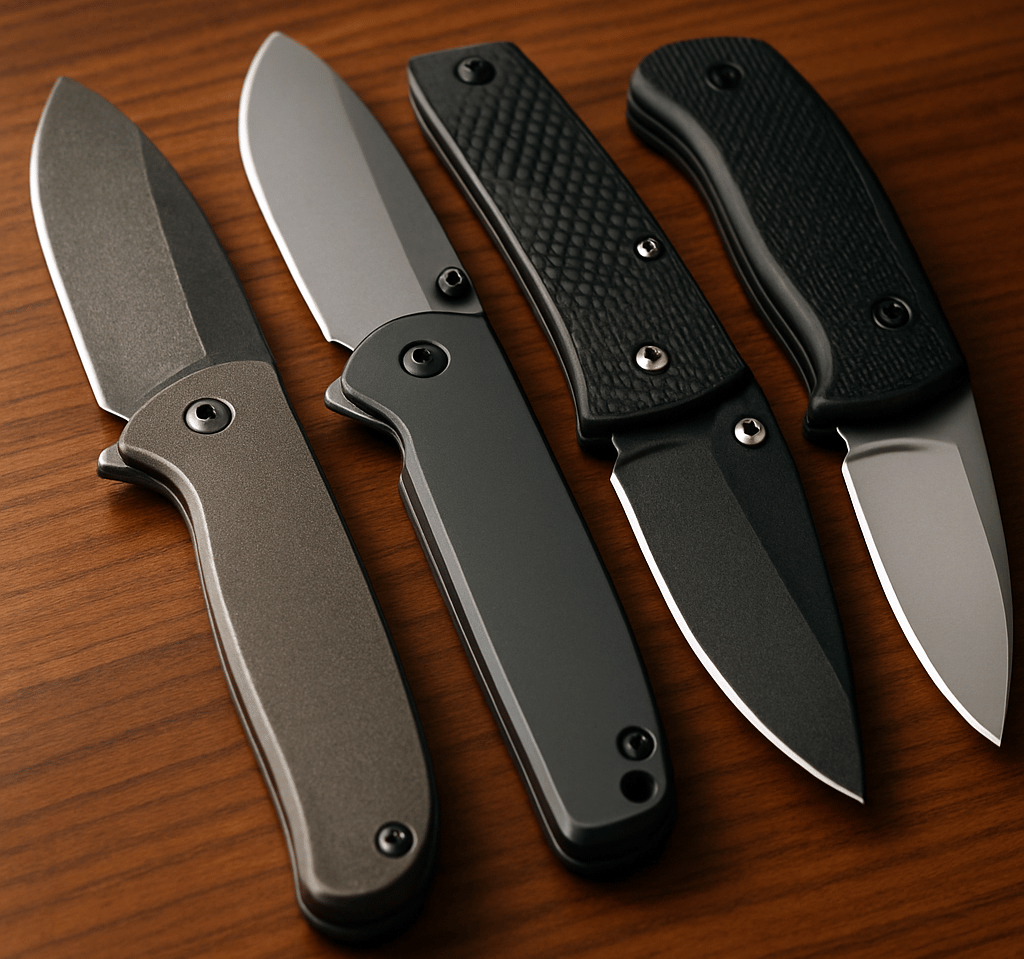
Everyday carry knives have a special place in the pockets of many who appreciate a reliable tool that’s ready when called upon. The phrase “EDC knife” covers a lot of ground—from those ultra-compact blades that silently slip in and out unnoticed, to more substantial folders or fixed blades that have earned their keep over the weeks and months of daily use. This guide breaks down the types of EDC knives to help you find one that not only fits your hand but also your everyday needs. Whether you’re opening packages, prepping a quick lunch, or tackling random little tasks, understanding the different styles and features can mean the difference between carrying a tool you use and one you can’t wait to leave behind.
Quick Verdict
Folding knives are the most common everyday carry knives due to their compact size, safety, and convenience.
Blade shapes like drop point and tanto influence cutting control and strength, which affects what you can comfortably tackle.
The choice of blade and handle materials impacts durability, sharpening needs, and pocket feel.
Always consider local blade length laws and your own comfort before investing in a heavier or larger knife.
What is an EDC Knife?
At its core, an everyday carry or EDC knife is designed to be your go-to cutting tool for routine tasks. It isn’t a “showy” pocket knife meant only for weekend adventures, nor is it an overbuilt beast better suited for intensive work. An EDC knife is the quiet, dependable companion that finds a spot in your pocket or bag, waiting for moments like slicing tape, trimming cords, or making quick food prep less awkward. Over time, you notice how it handles these tasks and how it behaves tucked away during the day—weight, grip, lock reliability, and even how well it fits amidst keys and phone. If you want a broader overview of how these tools fit into everyday carry as a whole, it helps to start with the fundamentals of EDC knives.
Popular Types and Styles of EDC Knives
Folding Knives
Folding knives dominate the EDC scene for good reason. Their ability to fold the blade into the handle not only protects the edge but keeps the overall size compact and safe to carry. A strong locking mechanism—common types include liner locks, frame locks, and back locks—gives confidence that the blade won’t close on your finger mid-use. If you’re not familiar with how these systems differ, it’s worth understanding the basics of knife lock types before settling on one.
After carrying a folding knife consistently, the weight becomes part of your pocket’s landscape, neither intrusive nor forgotten. Folding knives tend to feature pocket clips, which, if well-designed and placed, make carry seamless and retrieval quick. Over long use, the quality of the pivot and deployment method—thumb stud or flipper—can either become a welcome ritual or a minor daily annoyance if stiff or awkward.
Pocket Knives
Often overlapping with folding knives, pocket knives historically lean towards simple slipjoints without locks. These tend to have multiple blades or tools, making them versatile for light tasks. They’re typically lightweight and minimalistic. The lack of a locking mechanism means extra caution during use, but for many, their slim profiles and traditional feel make them hard to replace. After carrying one for days on end, the tradeoff between simplicity and security becomes clear—you will appreciate the extra peace of mind that a lock offers, especially when cutting tougher materials.
Fixed-Blade Knives
Fixed blades often get overlooked in the EDC conversation because they don’t fold up discreetly, usually requiring a sheath. Still, a smaller fixed blade can offer unmatched strength and simplicity—no moving parts to worry about. If your daily tasks swing towards outdoor work or heavier cutting, a fixed blade might settle into your routine more naturally than a folding knife that strains under heavier loads. If you’re weighing the tradeoffs, comparing folding vs fixed blade EDC options can make the decision much clearer.
The tradeoff? They’re bulkier to carry and need a deliberate setup. After weeks of carry, you’ll appreciate the solidity and readiness, but you’ll also notice that your pocket—or perhaps your belt—has a new, less forgiving guest.
Blade Shapes and Their Uses
Every blade shape subtly changes what an EDC knife feels like in hand and how it behaves on the task at hand. If you want a deeper breakdown, exploring different knife blade types can give you a clearer sense of what works best for your needs.
Drop Point
The drop point is the reliable all-rounder. Its convex curve creates a strong tip ideal for controlled slicing and piercing without feeling like it’s going to break if pressed a little too hard. Over time, it’s forgiving and practical—perfectly suited for those daily tasks like opening boxes or food prep. You’ll want to see one in your pocket about as often as your coffee cup.
Tanto
The tanto blade has a more angular tip, designed to withstand pressure on the point. While more niche in appearance, it offers excellent tip strength and is handy for piercing harder materials. It’s less common than drop point for everyday use but fits those who want a blade that can take on more force. After some use, you might find the tanto less intuitive for general slicing but great for tougher tasks.
Clip Point
The clip point sharpens the blade’s tip for more precise cuts and offers excellent control, especially for detail work. It’s a favorite among those who want to balance versatility with fine control. It has a slightly thinner blade profile, which translates to faster wear, so watch those sharpening habits.
Materials Matter: Blades and Handles
Blade Materials
Stainless steel remains king for EDC blades thanks to corrosion resistance and reasonable edge retention. It’s low-maintenance, which suits most daily users who prefer to carry and forget. High-carbon steel, on the other hand, takes a sharper edge and holds it longer but demands more care—it can rust if neglected. If you’re deciding between options, a proper EDC knife steel guide can help you understand what you’re really trading off.
Over weeks, you’ll discover that a stainless blade might dull faster but won’t require the same frenetic upkeep, a comfort for many who don’t want an extra chore.
Handle Materials
Handle materials speak mostly to weight, grip, and durability. Metals like titanium or aluminum lend lightness with strong durability but can feel cold or slippery in wet conditions. On the other hand, polymers and G10 composite handles provide better grip textures and warmth but might not feel as refined. When you carry a knife every day, these subtle differences add up—what felt fine on day one may develop annoyances by day five if the handle’s edges aren’t well-rounded or the grip is too slick.
Opening Mechanisms Explained
How you open your knife influences how often you’ll grab it out of your pocket. Manual thumb studs require a deliberate flick of the thumb, while flipper tabs offer a quicker deployment with a flick of a finger on the handle’s back. Assisted opening offers an extra spring, which can sometimes feel like cheating or a convenience, depending on your mood and finger dexterity. Over time, a worn pivot can lead to wobble or a louder deploy, the kind you don’t even notice until you swap knives. A smooth, consistent opening is one of those annoyances you learn to live with or chase relentlessly.
Legal Considerations for Carrying EDC Knives
Knife laws vary widely—both in blade length and carry restrictions—depending on your area. Generally, keeping blade lengths between 2.5 and 3.5 inches for EDC knives stays within most legal guidelines. It’s worth double-checking local regulations before buying: you want a useful tool, not a conversation with law enforcement. Beyond legality, consider how your knife looks to those around you, especially if you plan to carry in urban environments. A slipjoint pocket knife can sometimes avoid raising eyebrows compared to a heavier locking folder.
How to Choose the Best EDC Knife for You
Choosing the right EDC knife boils down to matching the tool to your daily habits and comfort. Ask yourself what tasks you do regularly—are you opening boxes, cutting rope, prepping snacks, or all three? Next, consider your carry preferences. Do you want something that disappears in your pocket, or are you fine with a tool that calls a little more attention to itself?
From there, think about blade size and shape. A drop point folding knife around three inches might serve most daily needs well. Handle comfort is key—your hand should settle on the handle like it belongs there, especially if you use it for more than a quick cut. And don’t underestimate maintenance: knives that demand frequent sharpening may lose points in your book if you lack the time or patience. If you’re narrowing things down, looking at the current best EDC knives can give you a practical starting point.
Care and Maintenance Tips
A neglected blade will fail you faster than a bad day at the office. Regular cleaning after rough use, especially if you’ve been around moisture or sticky residue, keeps corrosion at bay. Sharpening frequency depends on how much your knife sees the edge of usefulness. As a rule of thumb, touch up every few weeks if you carry one daily. Try to use sharpening systems that maintain the original blade angle. Oils on pivots keep folding knives smooth and ensure they open and close without complaint.
Common Mistakes
One of the most frequent mistakes people make is going big in blade size, thinking bigger means better. In reality, a blade too large or heavy quickly becomes a pocket burden. It might offer more cutting surface, but if it spends 90% of the day caught on your waistband or weighing down your pants, it’s failing its EDC role. Similarly, ignoring blade maintenance can lead to dullness that forces awkward cutting angles or worse, slips.
Another pitfall is buying a knife with an uncertain or unreliable locking mechanism. Over time, this can impact safety and confidence in the tool. Lastly, it’s easy to overlook local laws—investing in a knife that’s not legal to carry is an expensive way to learn.
FAQ
What are the main types of EDC knives?
The main types include folding knives, pocket knives (often slipjoint), and fixed-blade knives. Folding knives are the most common due to their compact and safe design.
How do I choose the right blade style for my needs?
Consider the tasks you expect to perform. Drop point blades offer versatility, tanto blades provide tip strength for piercing, and clip points allow fine control. Match shape to frequent use for best results.
What materials are best for EDC knife blades and handles?
Stainless steel blades offer corrosion resistance and easier maintenance; high-carbon steels hold sharpness longer but need more care. Handles come in metal, polymers, or composites like G10, chosen for grip, weight, and durability.
Are folding knives safer than fixed blades for daily carry?
Folding knives generally offer safer carry thanks to locking mechanisms and compact design, while fixed blades provide strength but require a sheath and usually more deliberate carry setups.
What size EDC knife is ideal for everyday tasks?
Blades between 2.5 and 3.5 inches tend to balance cutting capability with legal carry compliance and pocket comfort.
How do I legally carry an EDC knife?
Check local laws for blade length limits, carry restrictions, and requirements on locking mechanisms. Carry knives designed to meet these criteria, and avoid knives that draw unnecessary attention.
How often should I sharpen my EDC knife?
Sharpen as needed based on use, typically every few weeks for daily carriers. Regular touch-ups maintain performance and reduce the risk of slips.
What features should I look for in a quality pocket knife?
Look for reliable locking mechanisms, comfortable handle ergonomics, appropriate blade shape and size for your uses, and durable materials that suit your maintenance habits.
Practical Conclusion
Living with an everyday carry knife reveals much that first impressions miss. The right knife combines thoughtful design, comfortable carry, and materials that endure daily use without fuss. Folding knives continue to dominate because they strike a practical balance, but fixed blades and traditional pocket knives have their niches, especially when heavy use or simplicity matters. Pay attention to blade shapes—they matter more than you realize when your knife becomes a tool, not just a nice object.
If you’re comparing real-world options, it can also help to see how popular models stack up, like in a direct Civivi Elementum vs CJRB Pyrite.
Take your time choosing and carry consistently—only then will you notice the subtle differences that separate a knife you rely on from one that spends more time forgotten. And remember, a good EDC knife should get out of your way—unless, of course, it reminds you of that forgotten sandwich in your pocket.
Hello@TheBuzzHQ.com
© 2026 EDCBuzz. All rights reserved.
EDCBuzz
Master everyday carry systems with clarity and precision. Built for real environments and practical use.
For educational purposes only.
General Inquiries: