
EDC Knives:
Complete Guide to Everyday Carry Blades
An everyday carry (EDC) knife is a compact, reliable cutting tool designed to be carried daily for practical tasks. From opening packages to cutting cordage or handling small repairs, EDC knives are built for convenience, durability, and quick access.
Unlike larger fixed blades or specialty knives, EDC knives prioritize portability and usability. Most are folding knives with pocket clips, allowing them to integrate seamlessly into daily routines without adding bulk.
EDC knives are not about survival scenarios—they are about everyday utility.

Quick Verdict
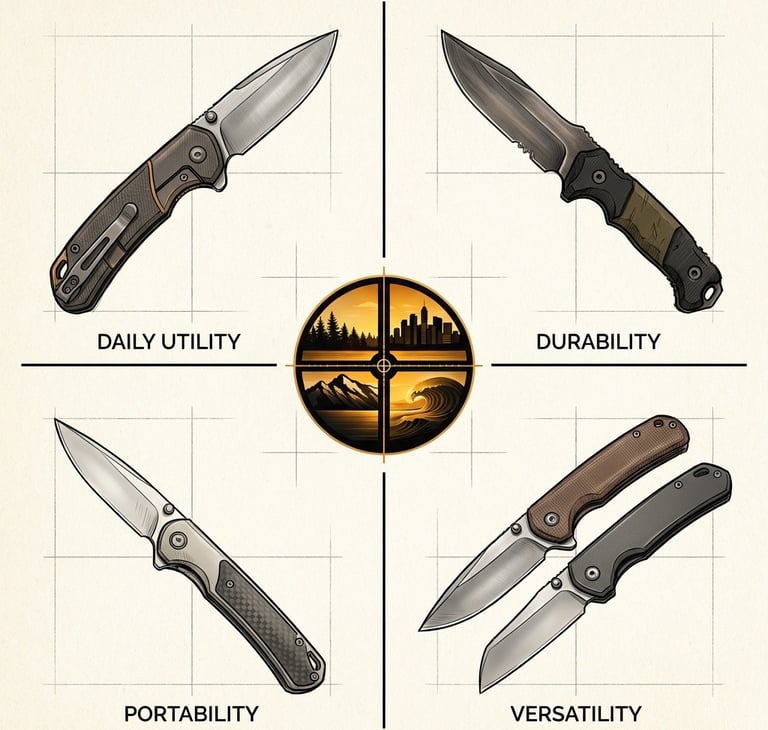
Best for daily utility: Folding knives with pocket clips
Best for durability: Stainless or tool steel blades
Best for portability: Slim, lightweight designs
Best for versatility: Drop point or sheepsfoot blades

Types of EDC Knives
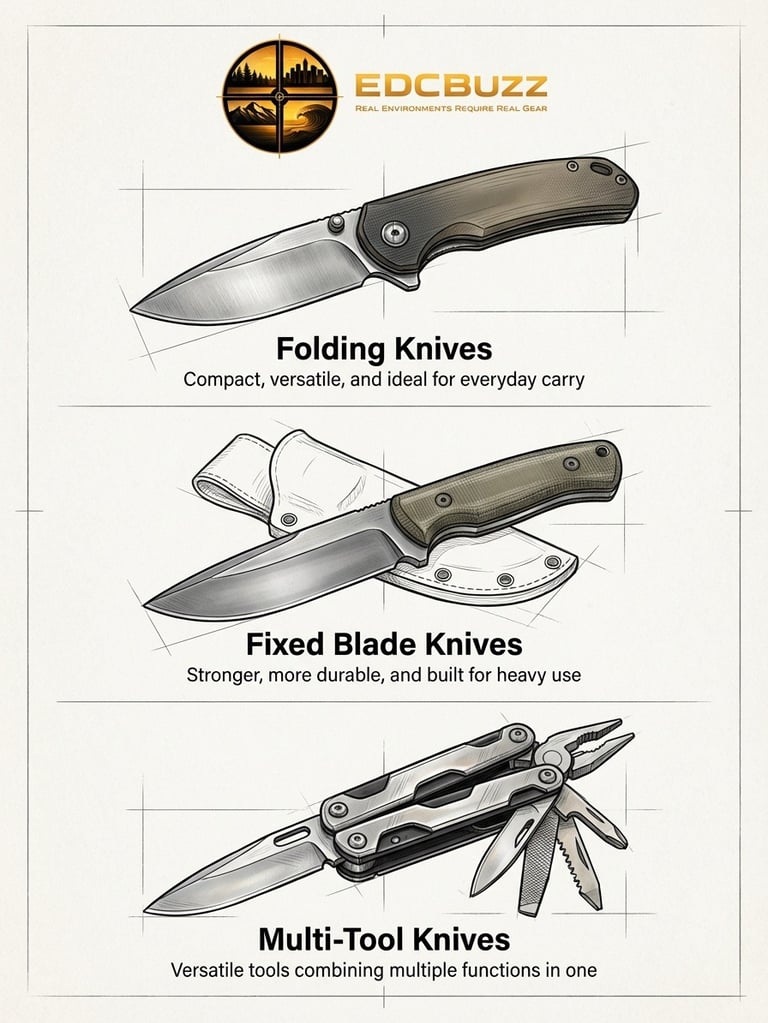
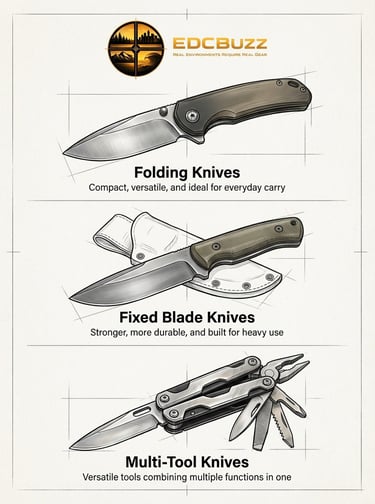
Understanding knife types is the first step in choosing the right carry.
If you’re just getting started, understanding what EDC really is helps put these categories into context.
Folding Knives
Folding knives are the most common EDC option—and for most people building a setup, they’re the foundation of everyday carry. They feature a pivoting blade that folds into the handle, making them compact and safe to carry.
They are ideal for everyday tasks and come in a wide range of sizes and styles.
Fixed Blade Knives
Fixed blades are stronger and simpler, with no moving parts. While less common for urban carry, they are preferred in outdoor or heavy-use environments.
They require a sheath and are typically carried on a belt or bag.
Multi-Tool Knives
Multi-tools combine a knife blade with additional functions like screwdrivers, scissors, and pliers.
These are best for users who prioritize versatility over blade performance.
If you’re comparing carry styles, it helps to look at folding vs fixed blade EDC to understand the trade-offs.
Blade Shapes Explained
Blade shape directly impacts how a knife performs in daily use. It determines how the edge engages material, how strong the tip is under pressure, and how much control you have during precision tasks.
Choosing the right blade shape isn’t about preference—it’s about matching the geometry of the blade to the type of work you expect to do.
If you want a deeper breakdown, this guide on knife blade types explained covers how each shape performs in real use.
Drop Point
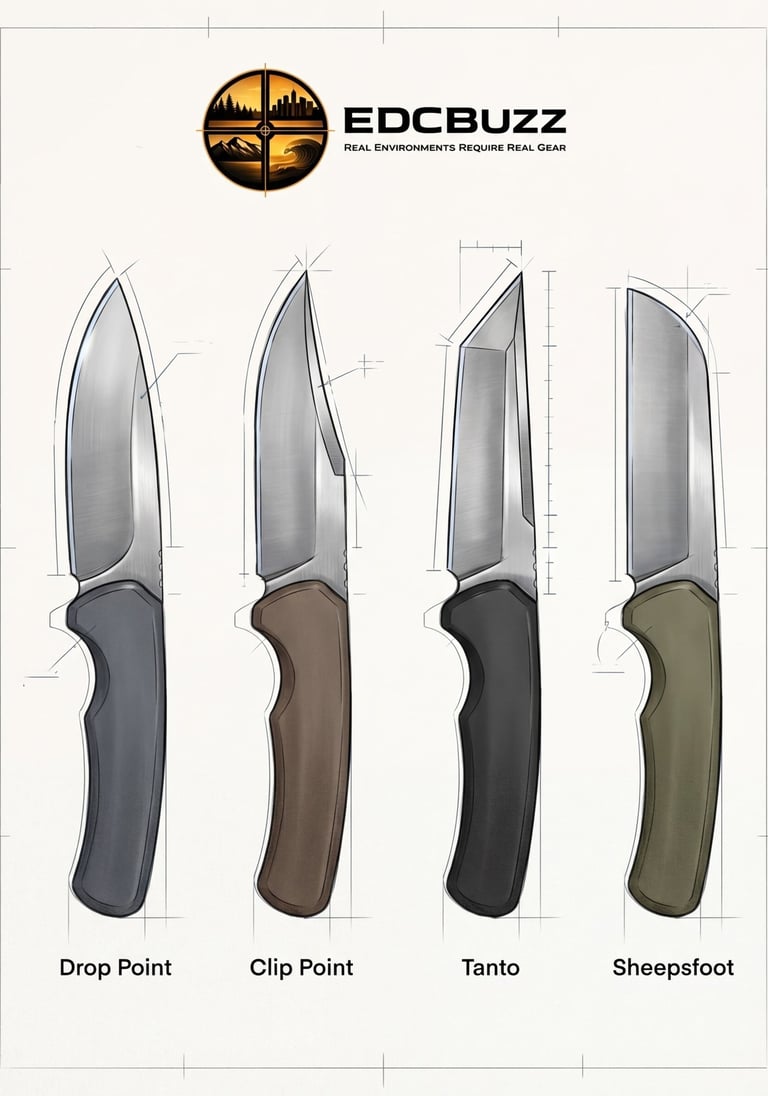
The drop point is the most balanced and versatile blade shape for everyday carry. Its gently sloping spine creates a strong, controllable tip without sacrificing cutting surface.
This design excels at general utility tasks such as opening packages, cutting rope, and light slicing work. The curved belly provides smooth, continuous cuts, while the reinforced tip offers durability without feeling overly aggressive.
For most users, this is the safest and most practical starting point.
Clip Point
The clip point is designed for precision and control, featuring a concave or “clipped” section near the tip that creates a finer, sharper point.
This allows for more detailed work, making it ideal for tasks that require accuracy such as trimming, scoring, or controlled cuts in tighter spaces. However, the thinner tip can be more delicate compared to other blade shapes.
It’s a strong choice for users who prioritize control over durability.
Tanto
The tanto blade is built for strength and durability, especially at the tip. Its angular design creates a reinforced point that can handle tougher materials and higher pressure.
Unlike curved blades, the tanto edge is often segmented, which makes it less suited for slicing but highly effective for piercing and heavy-duty tasks. The geometry also provides excellent edge retention along the primary cutting surfaces.
This is a more specialized option, best suited for users who need maximum tip strength.
Sheepsfoot
The sheepsfoot blade features a straight cutting edge and a rounded spine that removes the risk of accidental punctures.
This design is excellent for controlled, clean cuts where precision and safety are important. It performs especially well in utility-focused tasks like cutting cardboard, rope, or plastic where a straight edge provides consistent contact.
Because of its predictable cutting behavior, it’s often preferred in work environments where control matters more than versatility.
Blade Materials
The steel used in a knife determines how it performs over time—not just how sharp it feels out of the box, but how well it holds that edge, how it reacts to moisture, and how much maintenance it requires.
There is no single “best” steel. Every option is a trade-off between edge retention, corrosion resistance, toughness, and ease of maintenance. Understanding these trade-offs is what separates a good knife choice from a frustrating one.
Steel choice is one of the biggest factors in performance—this full EDC knife steel guide breaks down what actually matters over time.
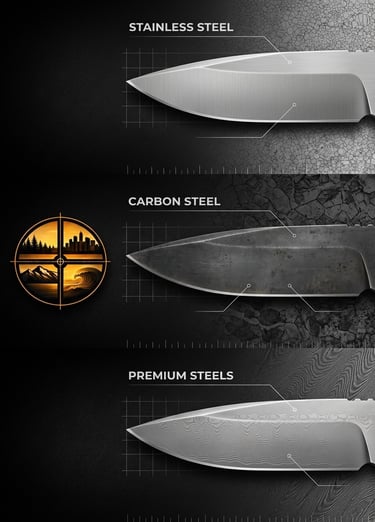
Stainless Steel
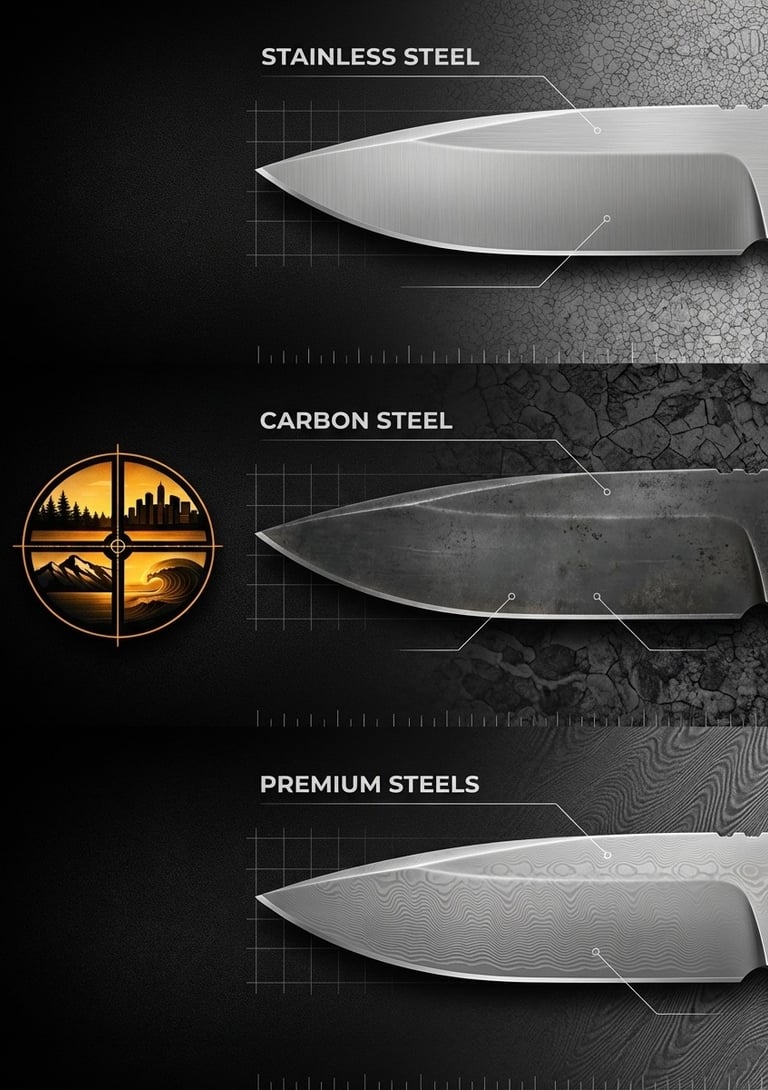
Stainless steel is the most practical and widely used option for everyday carry because of its strong resistance to rust and corrosion.
This makes it ideal for daily environments where the blade may be exposed to moisture, humidity, or inconsistent care. While stainless steels may not always hold an edge as long as high-carbon options, they are significantly easier to maintain and far more forgiving.
For most users, stainless steel offers the best balance between performance and convenience.
Carbon Steel
Carbon steel is known for its ability to take and hold a sharper edge for longer periods of use.
It performs exceptionally well in cutting tasks where edge retention and cutting efficiency matter most. However, this performance comes at the cost of maintenance. Carbon steel is more susceptible to rust and requires regular cleaning, drying, and occasional oiling to prevent corrosion.
Over time, it can develop a natural patina, which some users value for both protection and character.
Premium Steels
Premium steels are engineered to optimize multiple performance factors at once, offering improvements in edge retention, toughness, and corrosion resistance.
These steels are typically found in higher-end knives and are designed for users who demand consistent performance under repeated use. They often stay sharper longer and resist wear more effectively, but may require more specialized sharpening tools or techniques.
For users who rely heavily on their knife, premium steels provide long-term performance advantages that justify the investment.
Handle Materials
The handle material plays a critical role in how a knife feels and performs in daily use. It affects grip, comfort, weight, and long-term durability—especially in real-world conditions like moisture, temperature changes, and repeated handling.
Unlike blade steel, which focuses on cutting performance, handle materials are about control and reliability in your hand.
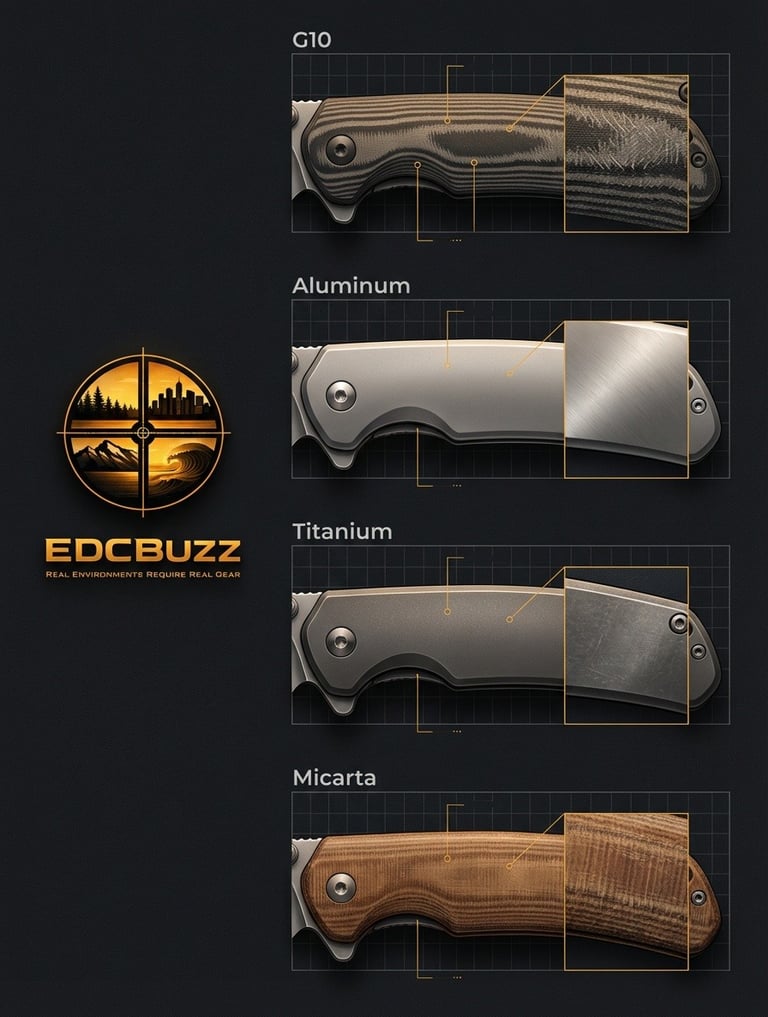
G10
G10 is a layered fiberglass composite designed for strength, durability, and grip. It is one of the most widely used handle materials in everyday carry knives because it performs consistently across a wide range of conditions.
Its textured surface provides excellent traction, even when wet, making it a strong choice for users who prioritize control. It is also lightweight and highly resistant to wear, impact, and environmental exposure.
For everyday use, G10 offers one of the best combinations of durability and grip.
Aluminum
Aluminum handles provide a clean, lightweight, and modern feel. They are commonly used in slim EDC knives where reducing weight and maintaining a sleek profile is important.
Depending on the finish—such as anodized, bead-blasted, or machined—aluminum can range from smooth to moderately grippy. While not as naturally textured as composite materials, it offers solid durability and corrosion resistance.
Aluminum is best suited for users who value a lightweight, minimal carry with a refined look.
Titanium
Titanium is considered a premium handle material due to its exceptional strength-to-weight ratio and long-term durability.
It is stronger than aluminum while remaining lightweight, and it resists corrosion extremely well. Titanium handles often feature stonewashed or machined finishes, giving them a subtle texture and a more refined feel.
While it may not offer the same level of grip as G10 or Micarta, it excels in durability and overall build quality, making it a popular choice in higher-end knives.
Micarta
Micarta is a composite material made from layers of fabric or paper bonded with resin, resulting in a unique, organic texture.
It offers excellent grip, particularly in wet or humid conditions, and develops character over time as it wears in. This makes it a favorite among users who want a more natural, tactile feel in hand.
Micarta balances durability with comfort, making it especially appealing for extended use and outdoor environments.
Locking Mechanisms
A reliable locking mechanism is what keeps a folding knife safe and usable under pressure. It ensures the blade remains securely open during use and prevents accidental closure that could lead to injury.
While most modern locks are effective when used correctly, each design offers a different balance of strength, ease of use, and long-term durability.
Lock type plays a major role in safety and usability—this guide on knife lock types explained breaks down how each one works.
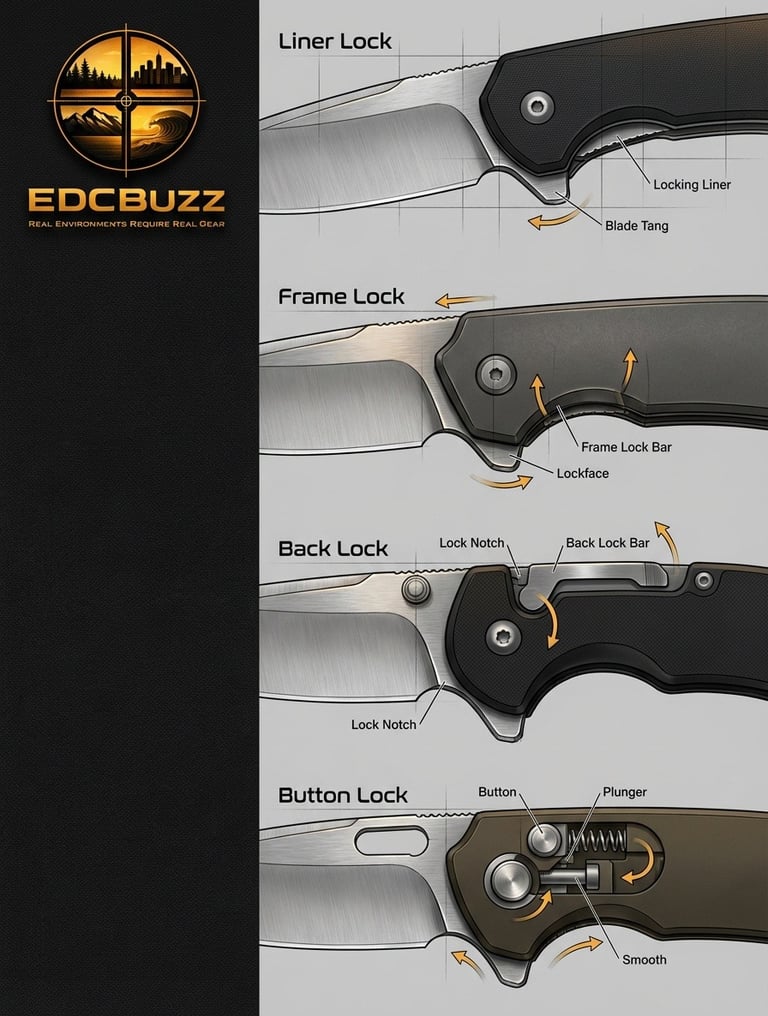
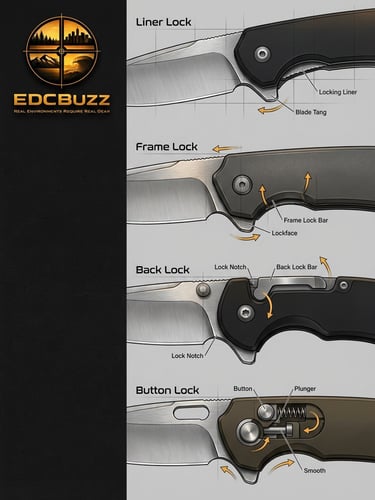
Liner Lock
The liner lock is one of the most common and widely used mechanisms in everyday carry knives. It uses a spring-like metal liner inside the handle that moves into place behind the blade when opened.
This design is simple, lightweight, and easy to operate with one hand. It allows for quick deployment and closing, making it ideal for general everyday tasks.
However, because the locking surface is relatively thin, it may not offer the same level of long-term strength as heavier-duty designs.
Frame Lock
The frame lock is an evolution of the liner lock, using the outer handle frame itself as the locking mechanism.
This results in a thicker, more robust lock with greater contact between the blade and the locking surface. The added strength makes it more reliable under heavier use while still maintaining simple, one-handed operation.
Frame locks are commonly found in higher-end knives due to their durability and solid feel.
Back Lock
The back lock uses a locking bar along the spine of the handle that engages with the blade when opened.
This design is known for its strength and reliability, as the lock engages from the top of the knife rather than the side. It distributes force evenly and is less likely to disengage under pressure.
While extremely secure, it can be less convenient to operate one-handed compared to liner or frame locks.
Button Lock
The button lock uses a spring-loaded plunger that engages the blade when open and releases it when the button is pressed.
This mechanism allows for very smooth operation and easy one-handed use, making it popular among users who value speed and convenience.
Because the locking system is internal, it can feel cleaner and more controlled, though it may require more precise manufacturing to maintain long-term reliability.
Choosing the right knife depends on how and where you plan to carry it.
Consider:
Size and weight for daily comfort
Blade shape for your primary tasks
Handle material for grip and durability
Lock type for safety and ease of use
Urban users may prefer slim, discreet designs, while outdoor users may prioritize durability and grip.
If you’re building your first setup, this EDC for beginners guide walks through what actually matters day to day.
How to Choose the Right EDC Knife
EDC Knives
(Best Picks & Comparisons)
Legal Considerations
Knife laws vary by location, including restrictions on blade length, locking mechanisms, and carry methods.
Always check local regulations before carrying a knife daily.
EDC Knife vs Multi-Tool
While both serve similar purposes, they excel in different areas.
EDC Knife
Better cutting performance
Simpler and more focused
Multi-Tool
More versatile
Includes additional tools
Many users choose to carry both depending on their needs.
Who Should Carry an
EDC Knife?
EDC knives are useful for:
Everyday tasks and quick fixes
Outdoor and travel use
Work environments requiring cutting tools
Preparedness and general utility
They are one of the most practical tools you can carry daily.
Related EDC Gear
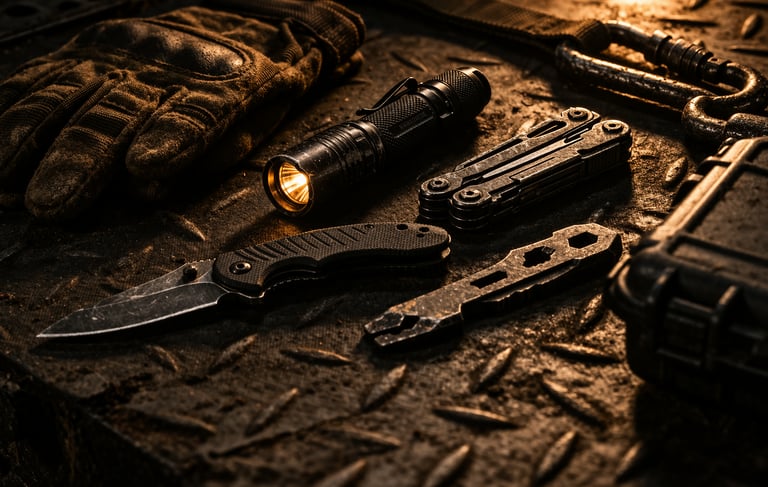
An EDC knife is most effective when paired with the right supporting tools. A well-built setup isn’t about carrying more—it’s about carrying what works together.
Flashlights
A compact flashlight adds immediate utility in low-light conditions and improves safety and control when using your knife. It’s one of the most practical additions to any EDC setup.
Multi-Tools
Multi-tools expand your capability beyond cutting with tools like pliers and screwdrivers. They complement a knife by handling quick fixes and adjustments.
Everyday Carry Bags
An EDC bag helps organize and carry additional gear without overloading your pockets, keeping everything accessible and structured.
Building a Complete Setup
A balanced EDC system focuses on what you actually use. A knife, light source, secondary tool, and simple organization create a setup that adapts without unnecessary bulk.
A well-balanced setup starts with the right foundation—this guide on how to build an EDC loadout ties everything together.
Frequently asked questions
What is the best size for an EDC knife?
The ideal EDC knife size is typically between 2.5 to 3.5 inches in blade length. This range offers a balance between usability and portability while remaining comfortable for daily carry in most environments.
Are EDC knives legal to carry?
EDC knife laws vary by location and can include restrictions on blade length, locking mechanisms, and how the knife is carried. It is important to check local and state regulations before carrying a knife daily.
What is the best blade shape for everyday carry?
Drop point blades are generally considered the best all-around option for EDC. They offer a strong tip, good control, and versatility for a wide range of everyday tasks.
What type of steel is best for an EDC knife?
Stainless steel is the most common choice for EDC knives due to its corrosion resistance and low maintenance. Premium steels offer better edge retention but may require more care.
Should I carry a fixed blade or folding knife?
Folding knives are the most practical option for everyday carry due to their compact size and ease of transport. Fixed blades are better suited for outdoor or heavy-duty use but are less convenient for daily urban carry.
How often should you sharpen an EDC knife?
Sharpening frequency depends on use, but most EDC knives should be touched up every few weeks with regular use. Light maintenance keeps the edge performing without requiring full sharpening as often.
What is the safest locking mechanism?
Frame locks and back locks are generally considered very secure. However, most modern locking mechanisms are safe when used properly, and the best choice often comes down to user preference and ease of operation.
Is it worth carrying an expensive EDC knife?
Higher-end knives often provide better materials, smoother action, and longer-lasting performance. However, a well-made budget knife can still perform reliably for everyday tasks, making it more about value than price.
Final Thoughts
An EDC knife is one of the most useful tools you can carry. The right choice depends on your daily environment, tasks, and preferences.
Focus on reliability, comfort, and usability—and your knife will become a tool you rely on every day.
Hello@TheBuzzHQ.com
© 2026 EDCBuzz. All rights reserved.
EDCBuzz
Master everyday carry systems with clarity and precision. Built for real environments and practical use.
For educational purposes only.
General Inquiries: