
Knife Lock Types Explained: Understanding Your Options
Knife Lock Types Explained: Understanding Your Options Explore the main knife lock types, their mechanical functions, pros and cons, and how to choose the best locking mechanism for your everyday carry needs.
EDC KNIVES
The EDCBuzz Editorial Team - Led by AJ “Buzz” Eichman
3/28/20265 min read
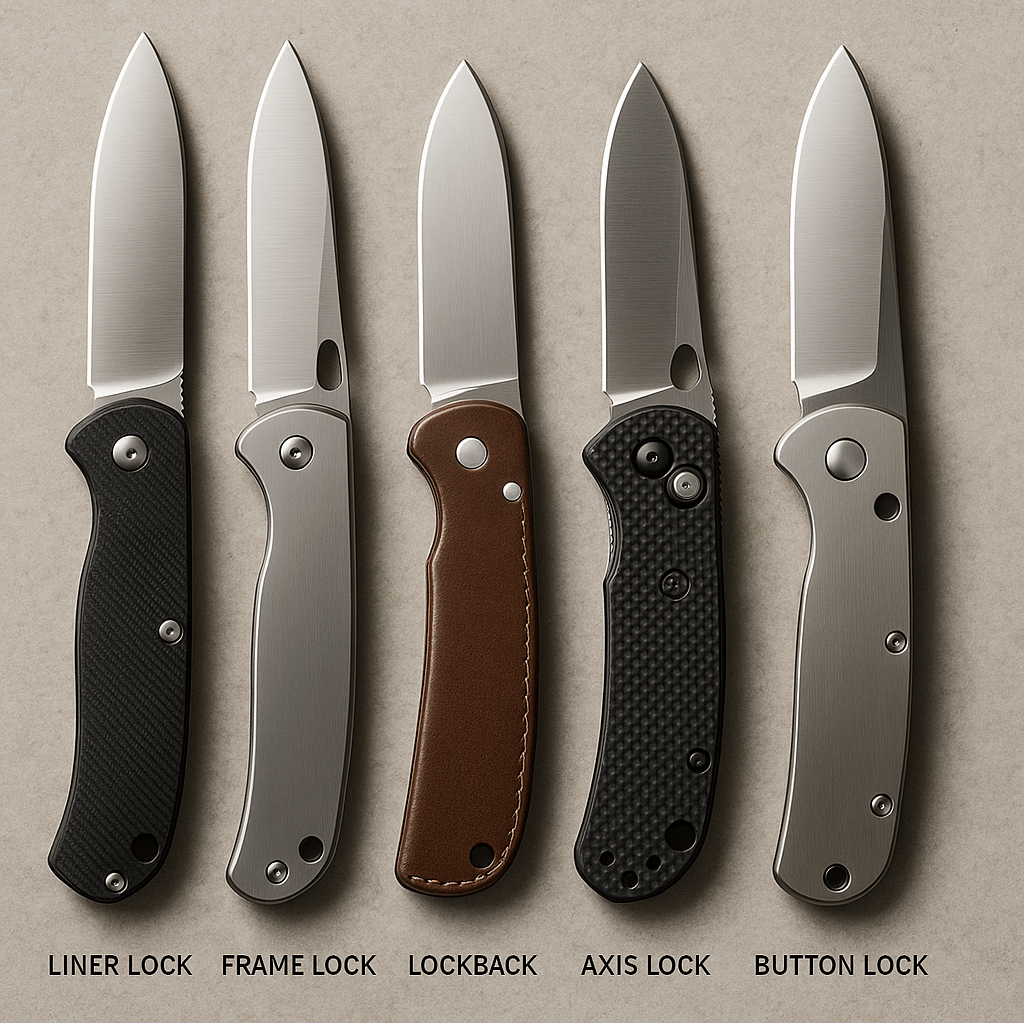
When you carry a folding knife as part of your everyday gear, the locking mechanism that holds the blade in place when open is more than just a safety feature—it’s central to how the knife performs, how reliable it feels under various tasks, and how easily you can manipulate it. Understanding knife lock types goes beyond just knowing their names. It means knowing how they work mechanically, what trade-offs they present, and how those factors affect your daily routine.
If you’re stepping back and looking at the bigger picture, it helps to understand how these systems fit into the broader world of EDC knives and how lock choice becomes just as important as blade shape or steel.
Quick Verdict
Liner locks offer an accessible, simple mechanism favored for ease of use but with moderate strength.
Frame locks build on liner locks with added rigidity and improved durability.
Lockbacks provide reliable engagement with strong feedback but often require two hands to operate.
Axis locks deliver smooth, ambidextrous operation and consistent lock strength.
Button locks allow quick release but may require more maintenance depending on design.
Overview of Knife Locking Systems
The role of any folding knife locking system is straightforward: secure the blade in the open position and prevent accidental closure during use. Different lock designs achieve this through various mechanical approaches, balancing strength, usability, and safety.
Understanding these differences becomes more useful when you start comparing how different knives behave in real-world use, especially when paired with resources like types of EDC knives that show how lock systems fit into overall knife design.
Detailed Explanation of Common Lock Types
Liner Lock
The liner lock is one of the most common locking mechanisms. It uses a spring-loaded liner inside the handle that moves into place behind the blade when opened, preventing it from closing.
This design is lightweight and easy to operate with one hand, making it popular for everyday carry. However, because the liner is relatively thin, it offers moderate strength compared to more robust lock types.
Frame Lock
Frame locks build on the liner lock concept by using part of the handle frame as the locking mechanism. This results in a thicker, more rigid lock that improves strength and durability.
The operation remains similar—pushing the frame aside releases the blade—but the added material provides greater resistance to wear and movement over time.
Lockback
Lockback knives use a bar along the spine that locks into a notch in the blade. When engaged, it provides a strong and secure hold with a distinct click.
This design is known for reliability, but unlocking typically requires two hands, which can slow things down compared to other systems.
Axis Lock
The axis lock uses a spring-loaded bar that slides into position to lock the blade. It’s accessible from both sides of the handle, making it one of the most ambidextrous designs available.
This mechanism allows smooth, controlled opening and closing, which becomes especially noticeable during repeated use throughout the day.
Button Lock
Button locks use a push-button mechanism to release the blade. Pressing the button disengages the lock, allowing the blade to close.
They are simple and intuitive but can vary widely in reliability depending on design quality. Maintenance is also more important due to additional moving parts.
How Each Lock Mechanism Works Mechanically
Each locking system is designed to counteract the rotational force applied during cutting. Liner and frame locks use spring tension to hold a metal section against the blade tang. Lockbacks rely on a pivoting bar to block movement, while axis locks use a sliding bar under spring tension.
Button locks disengage internal components with a spring-loaded button, offering quick release but requiring careful engineering to maintain safety.
These mechanical differences directly influence how each lock feels during use, especially after extended carry and repeated deployment.
Pros and Cons of Each Lock Type for EDC Tasks
Each lock type brings trade-offs that become more noticeable with real use.
Liner locks are lightweight and convenient but may show wear under heavy use. Frame locks add durability and strength but can be slightly heavier. Lockbacks provide strong engagement and feedback but are slower to operate.
Axis locks stand out for ambidextrous use and smooth action, making them ideal for frequent deployment. Button locks offer ease of use but may require more maintenance depending on their design.
Understanding these differences becomes even more valuable when you consider how lock choice interacts with materials, which is where an EDC knife steel guide helps connect durability and performance.
Safety Features and Best Practices for Locking Knife Use
Locking mechanisms improve safety, but they are not failproof. Different locks have different strengths, and applying excessive force or twisting pressure can compromise any system.
Regular inspection is important. Look for blade play, inconsistent engagement, or difficulty releasing the lock. Keeping the mechanism clean and properly lubricated helps maintain performance and reliability.
Maintenance Tips to Keep Knife Locks Functioning Smoothly
Knife locks rely on precise mechanical interaction, which means maintenance matters. Dust, debris, and moisture can affect performance over time.
Cleaning the pivot and lock components periodically helps prevent buildup. Applying a small amount of lubricant ensures smooth operation. Pay attention to moving parts like springs and lock bars, especially in more complex systems like axis or button locks.
Choosing the Right Knife Lock Based on Your Needs
Choosing the right lock system depends on how you use your knife.
If you value simplicity and lightweight carry, liner locks are a solid choice. For heavier tasks, frame locks offer more durability. If ambidextrous use matters, axis locks stand out. Lockbacks provide consistent reliability, while button locks offer quick and easy operation.
If you’re comparing complete knife setups, it can help to look at how these locks appear in real models across the best EDC knives available today.
Common Mistakes When Using Folding Knife Locks
One common mistake is assuming all lock types provide the same level of strength. Different designs handle stress differently, and pushing a knife beyond its intended use can lead to failure.
Neglecting maintenance is another issue. Dirty or dry mechanisms can become unreliable or difficult to operate. Users also sometimes overlook how lock design affects usability, especially for left-handed use.
Finally, not fully understanding how a lock releases can lead to awkward handling or accidental closure during use.
Frequently Asked Questions About Knife Lock Types
What is the strongest knife lock type for everyday carry?
Frame locks and axis locks are generally among the strongest due to their robust engagement and construction. Lockbacks also provide strong, reliable lockup.
How do I maintain and clean different knife locking systems?
Routine cleaning involves removing debris, wiping down components, and applying light lubrication to pivot and lock surfaces.
Are some lock types better suited for left-handed users?
Yes. Axis locks are fully ambidextrous, while many liner and frame locks favor right-handed use unless specifically designed otherwise.
Can locking mechanisms fail, and how do I recognize lock failure?
Yes. Signs include blade play, inconsistent locking, or difficulty releasing the lock. Regular inspection helps catch issues early.
What are the differences between frame locks and liner locks?
Frame locks use part of the handle as the locking mechanism, making them stronger. Liner locks use a thinner internal liner, which is lighter but less robust.
Is one-handed opening easier with certain lock types?
Yes. Liner, frame, axis, and button locks are designed for one-handed operation, while lockbacks often require two hands.
Do locking knives require more skill to operate safely?
They require familiarity with the mechanism. Understanding how your lock works improves both safety and ease of use.
How do button locks compare to other locking systems in terms of durability?
Button locks can be durable if well-designed but may require more maintenance due to additional internal components.
Practical Conclusion
Understanding knife lock types gives you a clearer view of how your knife functions day to day. Each system—liner, frame, lockback, axis, or button—offers a different balance of strength, ease of use, and maintenance.
If you want to see how these mechanisms play out in real-world comparisons, looking at side-by-side breakdowns like Kershaw Link vs Buck 250 Saunter helps connect design choices to actual use.
The right lock isn’t about picking the strongest or most complex—it’s about choosing the one that fits your habits, feels natural in your hand, and performs reliably every time you need it.

Hello@TheBuzzHQ.com
© 2026 EDCBuzz. All rights reserved.
EDCBuzz
Master everyday carry systems with clarity and precision. Built for real environments and practical use.
For educational purposes only.
General Inquiries: