
The Ultimate EDC Knife Steel Guide: Understanding Steel Types and Their Benefits
Discover how to choose the best EDC knife steel by understanding hardness, corrosion resistance, edge retention, and toughness for your daily carry needs.
EDC KNIVES
The EDCBuzz Editorial Team - Led by AJ “Buzz” Eichman
3/28/20265 min read
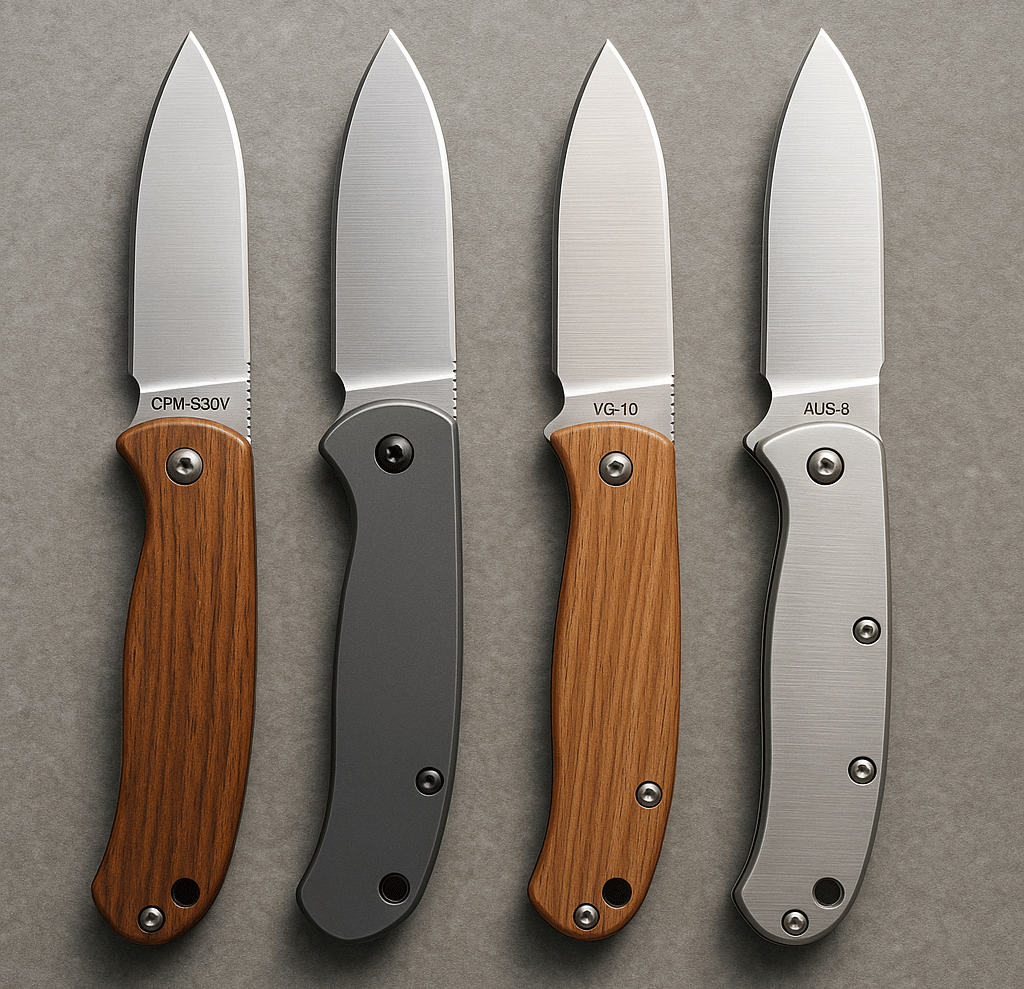
Everyday carry (EDC) knives serve as essential tools for a wide range of daily tasks—from opening packages and prepping food to light outdoor work and general utility. The steel chosen for the blade directly influences how well a knife performs these tasks, how often it needs maintenance, and how long it lasts. Understanding the different EDC knife steel types, along with their inherent properties like hardness, corrosion resistance, edge retention, and toughness, provides a clearer picture for selecting a blade that matches your lifestyle and needs.
If you’re building your understanding from the ground up, it helps to see how steel fits into the broader category of EDC knives and why material choice becomes just as important as blade shape or size.
In this guide, we’ll break down the critical aspects of knife steel, explore common steel types used for EDC, discuss how these choices impact real-world performance, and offer insights on maintenance and sharpening.
Quick Verdict
Higher hardness steels retain edges longer but tend to be more brittle and challenging to sharpen.
Stainless steels offer superior corrosion resistance, making them ideal for wet or humid environments.
Carbon steels typically deliver excellent toughness and sharpness but require regular upkeep to avoid rust.
Common EDC steels like CPM-S30V, 154CM, VG-10, and AUS-8 balance different properties to suit specific daily uses.
Understanding Knife Steel Properties: Hardness, Toughness, and Corrosion Resistance
To grasp why one steel is preferable over another, it’s important to understand the core properties that define knife blade materials. Hardness, toughness, and corrosion resistance form the primary axes along which steels vary.
Hardness, measured on the Rockwell C scale (HRC), affects how well a blade holds its edge during use. Higher hardness correlates with longer edge retention but often comes at the cost of reduced toughness. Most EDC steels fall in a range of approximately 56 HRC to 62 HRC, balancing durability with sharpenability.
Toughness describes a steel’s ability to absorb impacts without fracturing. Steels with greater toughness will better withstand prying, bending loads, or accidental drops. Corrosion resistance, largely influenced by chromium content, determines how well a blade resists rust and staining in everyday environments.
Common Steel Types Used in EDC Knives and Their Characteristics
Several steels have emerged as favorites in the EDC space due to their balance of performance and practicality.
CPM-S30V is a powdered metallurgy stainless steel designed for high-performance knives, offering excellent edge retention with strong corrosion resistance. It performs well across a wide range of tasks, though it requires more effort to sharpen.
154CM offers a similar profile but is easier to maintain, making it a strong middle-ground option. VG-10 provides good corrosion resistance with easier sharpening, while AUS-8 prioritizes affordability and simplicity at the cost of faster edge wear.
Carbon steels such as 1095 deliver excellent sharpness and toughness but require more care to prevent rust. If you’re comparing how these steels show up in real-world knives, browsing current best EDC knives helps connect the materials to actual performance.
How Steel Choice Affects Knife Performance in Real-World EDC Use
Selecting the right steel goes beyond specs—it’s about matching the tool to your environment and habits.
For humid conditions or food prep, corrosion resistance becomes critical. Stainless steels reduce maintenance and keep performance consistent. For tougher outdoor tasks, a balance of toughness and edge retention is necessary to avoid chipping while maintaining cutting ability.
If your use is mostly indoors—opening packages, cutting cardboard, light utility—ease of sharpening may matter more than long-term edge retention. In that case, steels like VG-10 or AUS-8 can feel more practical.
It’s also worth noting that steel choice works alongside blade design. Understanding how steel interacts with shape can become clearer when paired with resources like knife blade types explained.
Maintenance and Sharpening Considerations by Steel Type
Each steel behaves differently under maintenance. Harder steels hold an edge longer but require more effort and better tools to sharpen. Softer steels sharpen quickly but need more frequent touch-ups.
Stainless steels resist corrosion but still benefit from routine cleaning and occasional lubrication. Carbon steels require consistent drying and oiling to prevent rust but reward that effort with excellent sharpness and responsiveness.
Using the right sharpening system for your steel type makes a noticeable difference over time, especially as you begin to recognize how each blade responds to maintenance.
Comparing Popular EDC Steels: Pros and Cons
CPM-S30V stands out for edge retention and durability but requires more effort to sharpen. 154CM offers a more balanced approach with easier maintenance. VG-10 leans toward ease of use and corrosion resistance, while AUS-8 focuses on simplicity and affordability.
Carbon steels like 1095 excel in toughness and sharpness but demand the most upkeep. These trade-offs become clearer over time, especially once you begin using the knife consistently in your daily routine.
Choosing the Best Steel for Your Daily Carry Needs
Choosing the right steel depends on your environment, tasks, and willingness to maintain your knife.
If you’re frequently around moisture, stainless steel is the safer option. If toughness and sharpness matter most and you don’t mind maintenance, carbon steel may be worth considering. For ease of sharpening and everyday convenience, mid-range stainless steels provide a strong balance.
It also helps to compare steel choice alongside overall knife design. Looking at different types of EDC knives can help you understand how steel, shape, and construction come together in practical use.
Tips to Maximize Your Knife Steel’s Lifespan
Simple habits go a long way. Clean your blade after use, especially when exposed to moisture or food. Apply light oil to prevent corrosion where needed. Avoid using your knife for tasks that exceed its intended design, particularly with harder steels that may chip under stress.
Investing in a proper sharpening system and maintaining a consistent technique will extend the life of your blade and keep it performing reliably.
Common Mistakes in Selecting and Caring for EDC Knife Steel
One common mistake is prioritizing hardness without considering the environment. A steel that performs well in dry conditions may struggle in humid environments without proper care.
Another is assuming more expensive steel automatically means better performance. In reality, balance and suitability matter more than price alone.
Neglecting maintenance—especially with carbon steels—can quickly lead to corrosion and reduced performance. Many also overlook the importance of blade geometry, assuming steel alone determines how a knife performs.
Frequently Asked Questions About Knife Steel
What is the best steel for an everyday carry knife?
There is no universally best steel; it depends on your tasks and maintenance habits. Steels like CPM-S30V and 154CM offer balanced performance for most users.
How does steel hardness affect knife performance?
Higher hardness improves edge retention but reduces toughness, making blades more prone to chipping and harder to sharpen.
Which knife steels are easiest to maintain?
Stainless steels such as VG-10 and AUS-8 are easier to maintain due to their corrosion resistance and simpler sharpening requirements.
What steel offers the best corrosion resistance for EDC?
Steels with higher chromium content, like CPM-S30V, VG-10, and 154CM, provide strong resistance to rust and staining.
How do I sharpen different types of knife steel?
Harder steels require diamond or ceramic sharpening tools, while softer steels can be maintained with standard whetstones more easily.
Are premium steels worth the cost for daily use knives?
Premium steels offer advantages in edge retention and durability, but their value depends on whether those benefits align with your daily use.
What steel balances toughness and edge retention best?
CPM-S30V and 154CM are widely regarded as balanced options for everyday carry tasks.
Does blade coating affect steel performance?
Coatings improve corrosion resistance and reduce wear but do not change the underlying properties of the steel itself.
Practical Conclusion
Selecting the right steel for your EDC knife comes down to understanding how hardness, toughness, and corrosion resistance interact with your daily use. No steel excels in every category, but the right balance can make a noticeable difference in performance and maintenance.
If you want to see how these material choices translate into real-world differences, comparing actual models—such as a Bugout vs Para 3 comparison—can help connect theory to experience.
With a better understanding of steel, you’re not just choosing a knife—you’re choosing how that tool will perform day after day.
Hello@TheBuzzHQ.com
© 2026 EDCBuzz. All rights reserved.
EDCBuzz
Master everyday carry systems with clarity and precision. Built for real environments and practical use.
For educational purposes only.
General Inquiries: